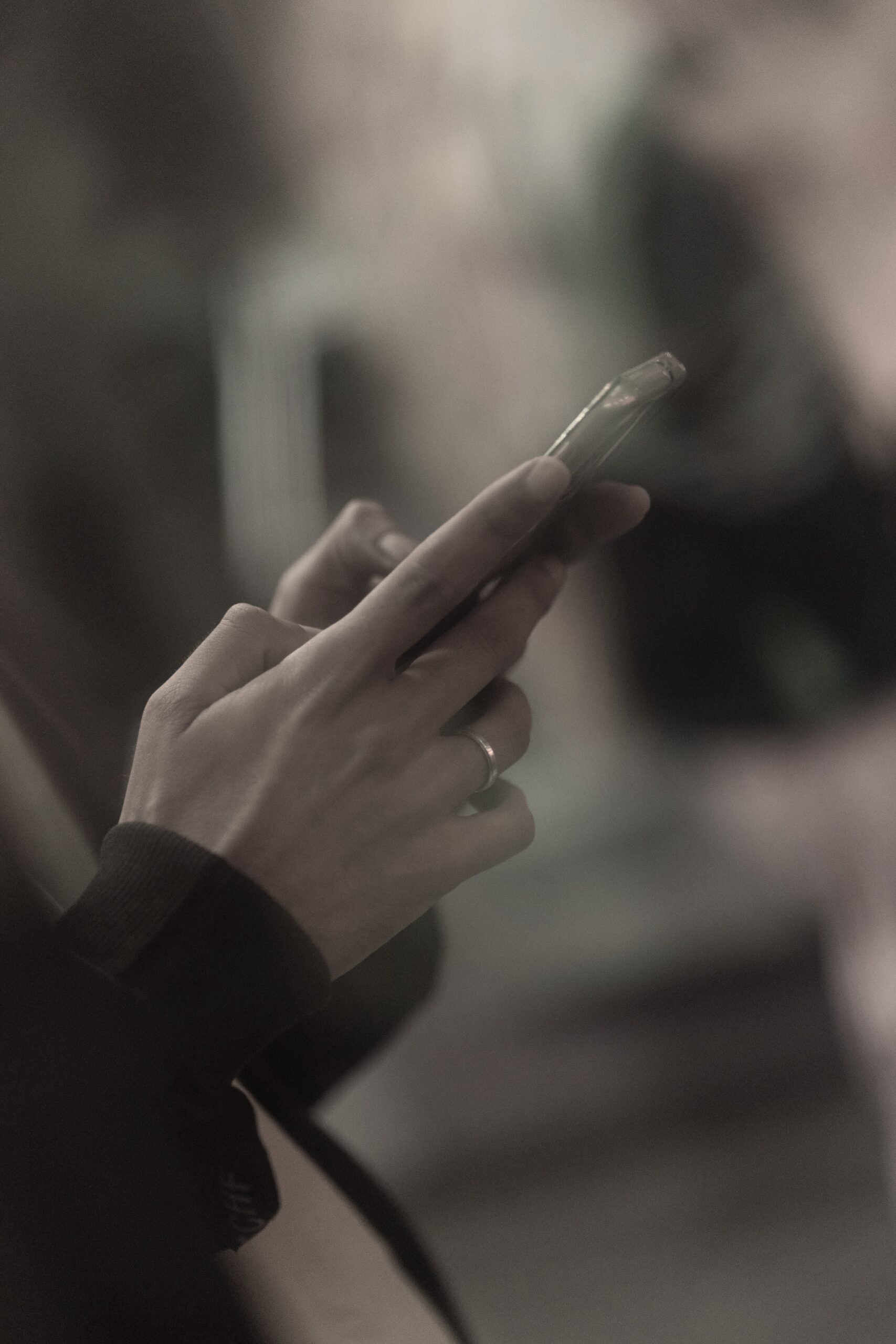
We’ve all heard it by now: we spend an incredible amount of time looking at screens.
The average daily screen time is somewhere around seven hours, including work, school, research and every other form of technology. Of course, some of this time is necessary. I work in IT, I study, I write my blog on a laptop — I’m definitely not here to tell you that technology is evil.
But I do think we’ve reached a point where we barely notice how often we reach for it.
About six or seven months ago, I deleted every social media app I regularly used from my phone — TikTok, Instagram, even YouTube. And the reason was pretty simple: all of them had slowly turned into the same thing.
Short-form content.
TikToks, Reels, Shorts. Different names, same concept: quick information, quick entertainment, quick dopamine. Everything has to be compact, stimulating and exciting enough to keep us from swiping away.
The concept obviously works. That’s why every platform uses it.
But there is another side to it.
The more used we become to being entertained every few seconds, the harder it becomes to appreciate the slower parts of life.
A conversation that doesn’t immediately excite you. Reading ten pages of a book. Sitting on a train and looking out of the window. Waiting for someone. Drinking a coffee without doing anything else.
Basically: being alive without constantly needing something to happen.
Since putting strict limits on social media, I’ve noticed drastic changes in the way I live my everyday life. And only recently did I realize just how different today feels compared to six months ago.
The Phone: Why It’s Quietly Blocking Us From Living
The phone was originally created to connect people, which is honestly incredible when you think about it.
Someone can move to the other side of the world and you can still hear their voice within seconds. We can access almost any information we need, save appointments, set reminders, navigate through cities, take pictures, work, study and communicate from one device.
Our phones make life easier.
Ironically, though, I sometimes think socializing has never felt more complicated.
Think about what happens whenever even a tiny moment of boredom appears.
We pull out our phones.
Waiting for the train? Phone.
Someone goes to the bathroom? Phone.
Conversation gets quiet for ten seconds? Phone.
Standing in line? Phone.
And while there is absolutely nothing wrong with switching your brain off sometimes, it becomes a problem when distraction becomes our automatic response to every empty moment.
I notice this especially when I’m with other people.
There can be a quiet moment in a conversation, and the second someone takes out their phone, I immediately feel slightly disconnected from them. They might still listen. They might even look up and react to what I’m saying.
But it doesn’t feel the same.
You can feel when someone is giving you their full attention.
And honestly, I think full attention has become one of the most underrated forms of affection.
So sometimes I wonder: is the tiny bit of stimulation we get from checking our phones really worth the depth we might be losing with the person sitting in front of us?
Unrealistic ideals
There is also something else happening socially.
I think many people would actually love being approached in real life.
Yet requesting someone on Instagram feels safer than walking up to them and saying, “Hey, I think you’re cute.”
So nobody approaches anyone because everyone assumes everyone else doesn’t want to be approached.
Then we all go home and complain about how difficult it is to meet people naturally.
Cute.
And then, of course, there is comparison.
Social media gives us the prettiest parts of other people’s lives at a ridiculous speed.
The vacation. The relationship. The body. The apartment. The promotion. The dinner. The friend group. The engagement. The “casual” morning routine filmed from six different camera angles.
And even when we logically understand that we are looking at selected moments, I don’t think our brains always process it that way.
There is still that little feeling of, Why does everyone else seem to have it figured out?
Meanwhile, two years ago, someone might have looked at one of your pictures and thought exactly the same thing.
Our perception of life gets distorted because we’re constantly comparing our full reality to someone else’s edited highlights.
My Journey With an “Offline Life”
I don’t think I’ll never use social media again.
I can absolutely imagine returning to it someday when it actually feels social to me again.
But when I deleted my apps, social media had stopped feeling particularly social.
I missed the internet of roughly 2010 to 2016, where people were simply posting weird pictures from their lives, sharing what they were doing and interacting with people they actually knew.
Today, a lot of social media feels more like personal branding.
Even normal people somehow have an “audience.”
And at the time, I simply didn’t feel like maintaining one.
I also had a very practical reason for deleting everything: I couldn’t afford to lose focus.
Between my bachelor’s degree and working part-time, my weeks were full. Even the time I spent commuting mattered.
I wanted train rides to become time for active recall, reading, writing — or actual rest.
And scrolling never gave me the kind of rest I thought it did.
I Learned How Much Time Exists in a Day
The first thing I noticed after deleting social media was boredom.
Suddenly, every tiny waiting moment was just… there.
No Instagram.
No TikTok.
Nothing to automatically open.
At first it felt strange.
Then I realized how useful those tiny pockets of time actually were.
I started carrying my laptop, a book and a physical notebook almost everywhere.
If I had two minutes, I would listen to a song or simply look around.
Five to ten minutes? I could read a few pages.
Fifteen minutes or more? Laptop out. Active recall, work, writing, planning.
And strangely enough, I stopped feeling like there was never enough time.
Because so many little things had already been done in the moments that previously disappeared into scrolling.
You don’t always need another productivity system.
Sometimes you just need your fifteen minutes back.
My Attention Became Quieter
Another change was my ability to focus.
I had experienced quite a lot of brain fog before, and reducing social media made me realize how much constant input might have contributed to it.
It felt like information finally had somewhere to land.
I could listen to people for longer. I could concentrate in class more easily. Reading became less mentally uncomfortable.
I wasn’t expecting my brain to suddenly become superhuman.
It simply felt less noisy.
And I think that distinction matters.
When your brain is constantly consuming new voices, images, opinions, trends, songs, headlines and advertisements, silence can almost feel uncomfortable.
But after a few weeks, silence stops feeling empty.
It starts feeling peaceful.
Life Started Feeling Like Mine Again
One of my biggest fears was that I would suddenly become disconnected from people my age.
What if I didn’t know the trends?
What if everyone referenced something I had never seen?
What if I became completely culturally irrelevant at twenty?
Very dramatic.
But it didn’t really happen.
Social media is so individualized now that two people sitting next to each other can have completely different algorithms anyway.
There are fewer universal internet moments than I thought.
And instead, my conversations started feeling more grounded.
The things I talked about came from books I had read, documentaries I had watched, articles I had found, places I had visited or things that had actually happened to me.
Not something a random guy confidently explained in thirty seconds while Minecraft gameplay played underneath.
My thoughts felt more like my thoughts.
And I also became much less aware of where I was supposedly “behind.”
I hate to tell you this, but yes — what we consume influences us.
Even when we think we’re above it.
When I stopped constantly seeing other people my age showing their most impressive moments, my own life became much easier to appreciate.
My ambition didn’t disappear.
My goals didn’t disappear.
If anything, they became clearer.
Because instead of wanting something because I had seen it twelve times that week, I had more space to ask myself:
Do I actually want this?
That question alone is incredibly powerful.
I Started Experiencing Moments Instead of Filling Them
But the most valuable change has been presence.
Friendships, concerts, bars, events, dinners, walks, even coffee breaks at work feel more intentional when there isn’t a phone constantly humming in the background.
Fifteen minutes with coffee and your phone can disappear without you even noticing.
Fifteen minutes with coffee and another person can turn into an entire conversation you remember weeks later.
And yes, I’ve become more sensitive to people pulling out their phones when I’m with them.
Maybe that’s the downside.
But I’ve also realized how deeply you can connect with someone when neither of you disappears into a screen.
You notice their expressions. Or the little jokes they make. You notice the music playing in the background. There’s a moment you get to look around. You actually memorize your life. And I think that is what I was looking for this entire time.
You Don’t Need to Become Anti-Technology
What I love about this experiment is that I didn’t have to reject modern life.
I literally work in IT.
Technology is part of my everyday life, and I think there are incredible things about it.
The goal was never to become some mysterious girl living in the forest without Wi-Fi.
It was simply learning how to use technology without constantly being used by it.
And maybe that starts with creating a little more friction.
Delete the apps for a while.
Leave your phone in your bag when you meet someone.
Bring a book on the train.
Take a walk without headphones.
Sit somewhere beautiful without immediately taking a picture.
Let yourself become bored.
Because boredom is sometimes just the empty space before your brain decides what it actually wants to do.
You might read.
You might call someone.
You might start writing.
You might notice a beautiful building.
You might have an idea.
You might approach someone.
You might simply sit there and realize that nothing needs to happen every second for a moment to be worth experiencing.
My Final Thoughts
I think what surprised me the most about living more offline is how much more interesting life became.
Not because my life suddenly became objectively more exciting.
But because I was there for more of it.
And maybe that is the real problem with excessive screen time.
It doesn’t only take hours away from us. It makes us feel like the interesting life is always somewhere else.
On someone else’s profile. In another city. At another party. Inside another relationship. In another body. In some perfectly edited future version of ourselves.
Meanwhile, your actual life is happening quietly in the background.
I used to love creating Pinterest boards filled with beautiful friendships, vacations, books, hobbies, cafés, outfits, apartments and places I wanted to discover.
And I still love Pinterest boards.
But at some point, you have to stop collecting pictures of the life you want.
The actually interesting thing is becoming the girl who makes the pictures.
So put your phone down. Grab your retro camera. Call your friend. Go somewhere. Stay a little longer. Talk to someone. Look around.
You don’t need more content. You need more of today.
I hope you loved this blog as much as I loved creating it! If you’re interested for more, here’s my latest post <3: How to Be a Radical Optimist – RomComToMe